Storm Season
Zero electricity costs, even in emergenciesDon't get caught in the darkBe prepared
Back to Blog
Hospitality
20 January 20266 min read

Outdoor Dining Lighting That Increases Revenue

Post-COVID demand for alfresco dining remains strong. Learn how ambient lighting extends dwell time and boosts per-head spend.

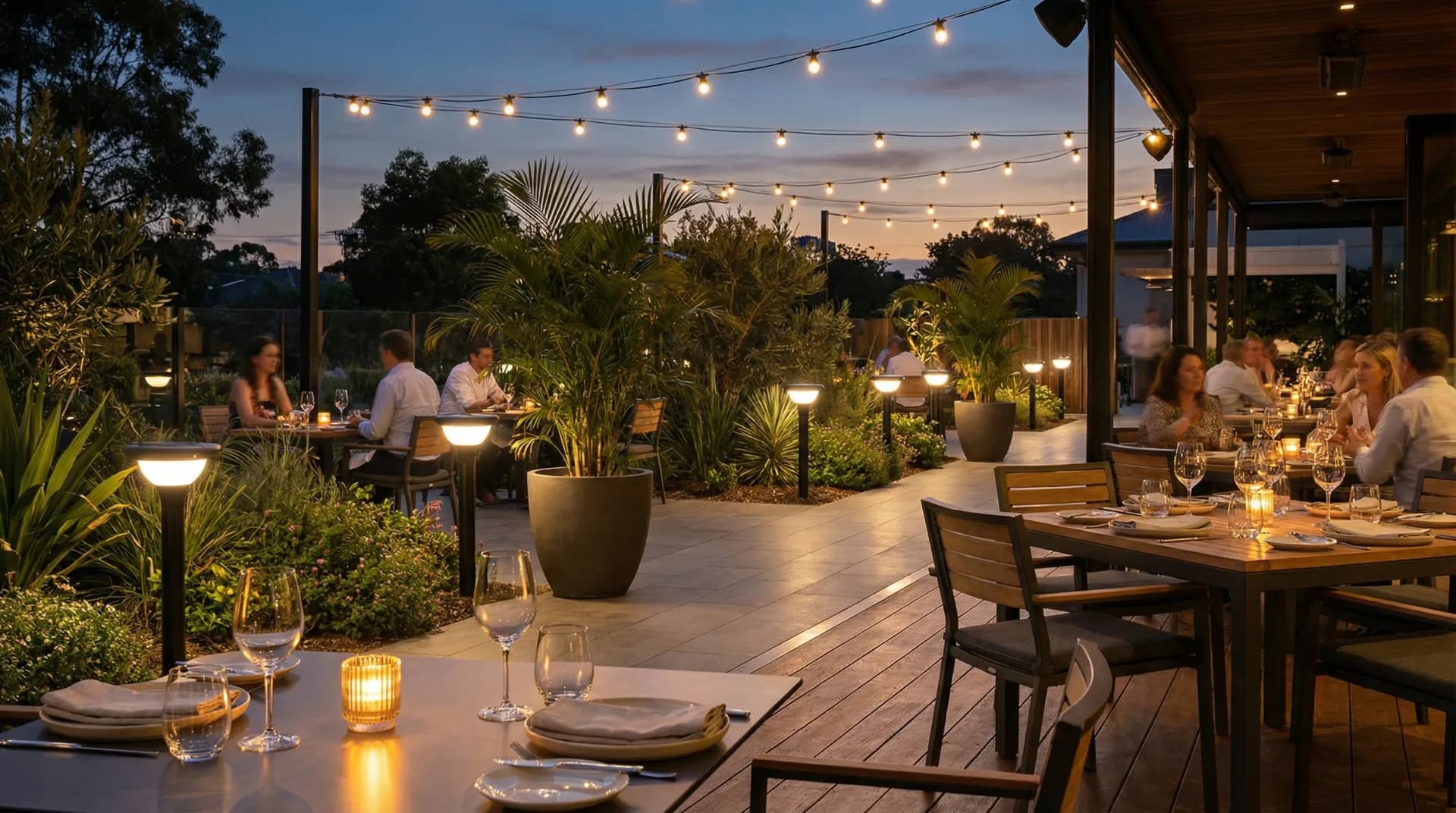
Restaurant outdoor dining area with warm ambient solar lighting creating inviting atmosphere at dusk

Warm ambient lighting transforms outdoor spaces into destination dining experiences

The Alfresco Revolution

COVID-19 fundamentally changed how Australians dine. The preference for outdoor spaces has remained strong. Hospitality venues with quality outdoor areas now command premium bookings, especially during Melbourne's warm evenings and Sydney's year-round temperate climate.

But an outdoor area is only as good as its ambiance after dark. Harsh floodlighting creates sterile, unwelcoming spaces. Poor lighting makes customers feel unsafe and leaves early. The right lighting strategy transforms your courtyard, rooftop, or footpath into a destination that keeps guests ordering.

How Lighting Impacts Revenue

Extended Dwell Time
Longer average stays
Comfortable, well-lit spaces encourage customers to linger over another drink or dessert
Evening Bookings
+40% dinner service capacity
Quality lighting makes outdoor areas usable for dinner service, not just lunch
Walk-in Traffic
Visible from street
Attractive lighting draws attention and spontaneous visits from passers-by
Social Media Appeal
Instagram-worthy moments
Photogenic lighting generates free marketing through customer posts

Creating the Right Atmosphere

Hospitality lighting is about psychology, not just visibility. The goal is to create spaces where guests feel relaxed, special, and inclined to stay. This requires layered lighting at different heights and intensities.

Overhead
String lights, pendants, festoon
Defines the space and creates canopy effect
2700K warm white
Table Height
Candles, lanterns, small lamps
Flattering facial lighting, intimate atmosphere
2200K candlelight
Ground Level
Bollards, uplights, path markers
Safe navigation, visual interest, boundary definition
3000K neutral warm

Hospitality Lighting Principles

Warmth
  • Use 2700-3000K colour temperature
  • Avoid cool white (4000K+)
  • Mix real flame with LED
  • Dimming capability essential
Layering
  • Minimum 3 height levels
  • Vary fixture styles
  • Create light and shadow
  • Highlight focal points
Safety
  • Illuminate steps and edges
  • Mark entry/exit paths
  • Adequate egress lighting
  • Balance ambiance with visibility
Flexibility
  • Dimmable fixtures
  • Moveable elements
  • Seasonal adjustments
  • Event configuration options

Why Solar for Hospitality

Zero Running Costs

Solar lights eliminate electricity costs for outdoor areas—straight to your bottom line

No Installation Disruption

Install without closing, trenching through pavement, or disrupting service

Unique Features

Flame-effect solar lights create firepit ambiance without fire permits or gas

Sustainability Story

Eco-conscious lighting resonates with customer values and brand positioning

7 Tips for Hospitality Lighting

1
Visit your space after dark
Experience your venue as a customer would. Note dead spots, harsh shadows, and areas that feel unsafe or uninviting.
2
Start with table-level warmth
Even simple solar lanterns or LED candles transform dining experience. This layer has the highest impact on guest comfort.
3
Add flame effect for drama
Solar flame lights create campfire ambiance without fire permits. Place near seating for warmth perception without heat.
4
Mark pathways with bollards
Guide guests safely while adding visual interest. Solar bollards work on pavement or lawn without wiring.
5
Highlight architectural features
Uplight trees, walls, or structures. Creates depth and visual interest that photographs well.
6
Consider seasonal variation
Shorter winter days mean earlier darkness. Ensure solar panels get adequate charging even in reduced daylight.
7
Test at different times
Lighting needs change from dusk (transition) to full dark. Adjust placement and intensity for optimal effect throughout service.

Key Takeaways

  • Quality alfresco areas help venues capture outdoor dining demand
  • Ambient lighting can increase comfort and encourage longer stays
  • Layer lighting at overhead, table, and ground levels using warm tones
  • Flame-effect solar lights create ambiance without open flames
  • Solar eliminates running costs and installs without disrupting service or trenching pavement
  • Photogenic lighting can generate organic social sharing

Sources & References

[1]
Emerging hospitality trends in AustraliaSilverChef AustraliaView source
[2]
Restaurant lighting and diner behaviorTasting TableView source
[3]
Ambient light influences on dining choicesPortland State UniversityView source

Transform Your Outdoor Dining Space

Create inviting ambience that keeps customers longer. Solar-powered, zero running costs, no electrician required.

This article was researched and written with the assistance of AI tools. While we strive for accuracy and cite official sources, information may change. We recommend verifying critical details with relevant authorities. This content is for general information only and does not constitute professional advice. Some links in this article may be affiliate links — if you purchase through them, we may receive a small commission at no extra cost to you, which helps support our content. See our Terms & Conditions for full disclaimer.