The Active Transport Opportunity
The 2024-25 Federal Budget allocated $100 million over four years for the National Active Transport Fund — dedicated funding for new bicycle and walking paths across Australia. This is just the federal contribution; state governments are adding substantially more. Queensland alone committed $315 million over four years for active transport infrastructure.
Every new shared path needs marking. And increasingly, councils are asking: how do we make these paths safe at night without the cost of electrical lighting?
That question is creating demand for a service most Australian line marking contractors don't yet offer: photoluminescent marking.
Why Now? Market Drivers
Federal Active Transport Fund
$100 million over four years (2025-2028) for new bicycle and walking paths. Councils will need contractors to mark these paths.
State Infrastructure Programs
Queensland alone committed $315 million for active transport over four years. Victoria estimated $400-600 million needed for safe cycling networks.
Eco-Friendly Requirements
Rising demand for sustainable, low-VOC solutions. Councils increasingly specify environmentally responsible materials in tenders.
Night-Time Safety Focus
Growing community pressure for safer cycling infrastructure. Photoluminescent marking addresses visibility without lighting infrastructure.
What is LuminoKrom?
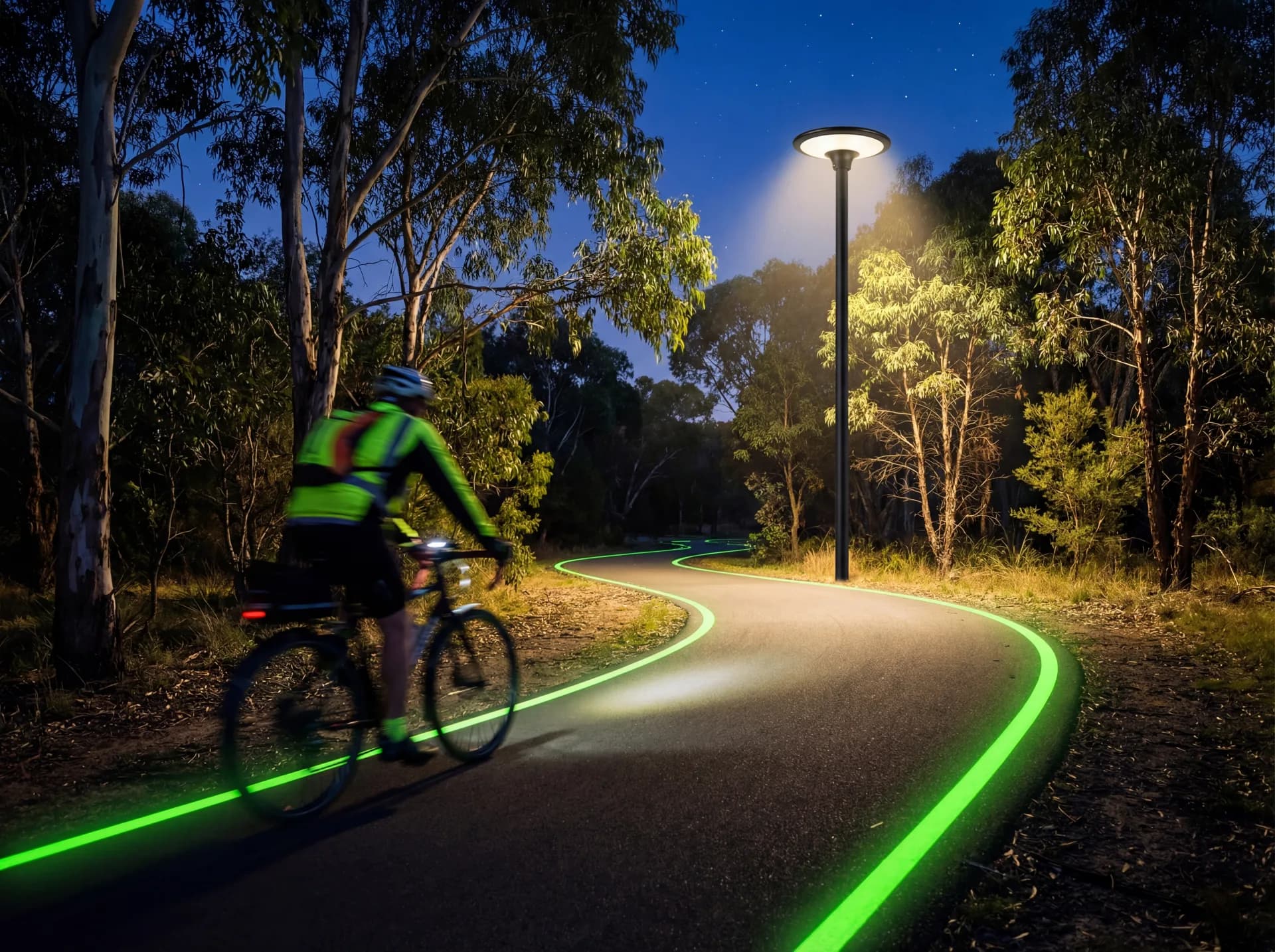
LuminoKrom is a Class G certified photoluminescent road marking materialdeveloped by French company OliKrom. Deployed since 2018, it charges from natural or artificial light during the day and glows for up to 10 hours at night — without any electricity, wiring, or ongoing power costs.
LuminoKrom has been applied in a growing number of projects worldwide. Major European line marking contractors have added LuminoKrom to their service offerings, including:
Application Types: Where the Work Is
Bike Path Edge Marking
Continuous or dashed edge lines on shared paths. Most common application — provides wayfinding in areas without street lighting.
Market potential: High — councils actively funding active transport infrastructure
Pedestrian Crossing Highlights
Accent marking on pedestrian crossings for after-dark visibility. Complements existing reflective road paint.
Market potential: Medium — safety-driven, especially near schools and aged care
Speed Hump & Hazard Marking
Highlighting speed humps, bollards, and obstacles in car parks and industrial sites. Reduces liability risk.
Market potential: Medium — commercial and industrial clients value safety
Emergency Exit Paths
Wayfinding lines for evacuation routes in large facilities, tunnels, and underground car parks.
Market potential: Growing — compliance-driven for building codes
Marina & Pontoon Marking
Edge marking on floating pontoons and boat ramps where electrical lighting is impractical or prohibited.
Market potential: Niche — high value per project due to marine conditions
The Business Case for Contractors
Why should you add photoluminescent marking to your service offering?
Premium Pricing
Photoluminescent marking commands higher margins than standard thermoplastic. Specialised service = reduced competition.
Recurring Revenue
Council pathway maintenance programs provide ongoing work. LuminoKrom lasts 5+ years but councils may expand coverage annually.
Differentiation
Most Australian line markers don't offer photoluminescent services. Early movers capture relationships with councils pioneering the technology.
Upselling Opportunity
Standard marking jobs become opportunities to propose photoluminescent upgrades for unlit sections.
Technical Requirements
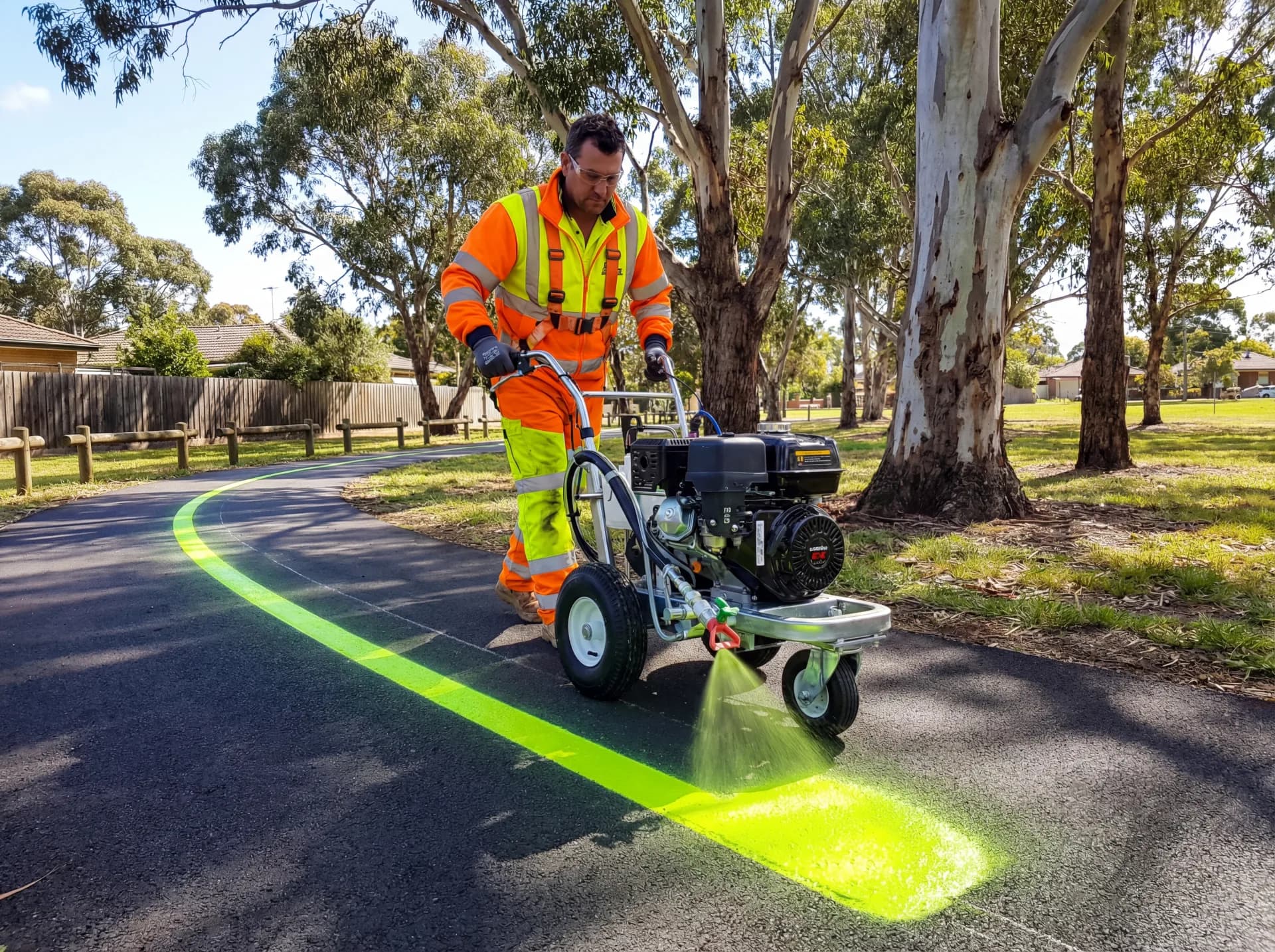
Good news: LuminoKrom application uses standard line marking equipment. If you're already applying thermoplastic or paint, you have the equipment foundation. The key technical considerations are:
Getting Started
- 1Contact Tarsior — As the Australian distributor of LuminoKrom, we can discuss applicator partnerships, provide product samples, and share technical specifications.
- 2Trial on a small project — Start with a contained application (e.g., a single path section or car park hazard marking) to build experience with application rates and techniques.
- 3Document results — Photograph the installation day and night. Councils evaluating photoluminescent options want to see local examples, not just European case studies.
- 4Approach council infrastructure teams — Present photoluminescent marking as a solution for paths where lighting infrastructure is cost-prohibitive. Many councils are unaware the technology exists.
- 5Watch tender portals — As awareness grows, expect to see photoluminescent specifications appearing in active transport tenders. Position early to be the contractor councils call.