The Emergence of Glowing Infrastructure
In November 2014, a small town in the Netherlands made global headlines. Nuenen, where Vincent van Gogh lived from 1883-1885, unveiled the world's first glow-in-the-dark bicycle path. Designed by Studio Roosegaarde in collaboration with infrastructure company Heijmans, the Van Gogh-Roosegaarde Cycle Path embedded thousands of photoluminescent stones into 600 metres of concrete, creating swirling patterns inspired by Van Gogh's "Starry Night".
Designer Daan Roosegaarde described his work as "techno-poetry" — technology in service of emotional connection. The path charges during daylight and glows for up to eight hours after sunset, guiding cyclists through the dark Dutch countryside while celebrating the town's cultural heritage.
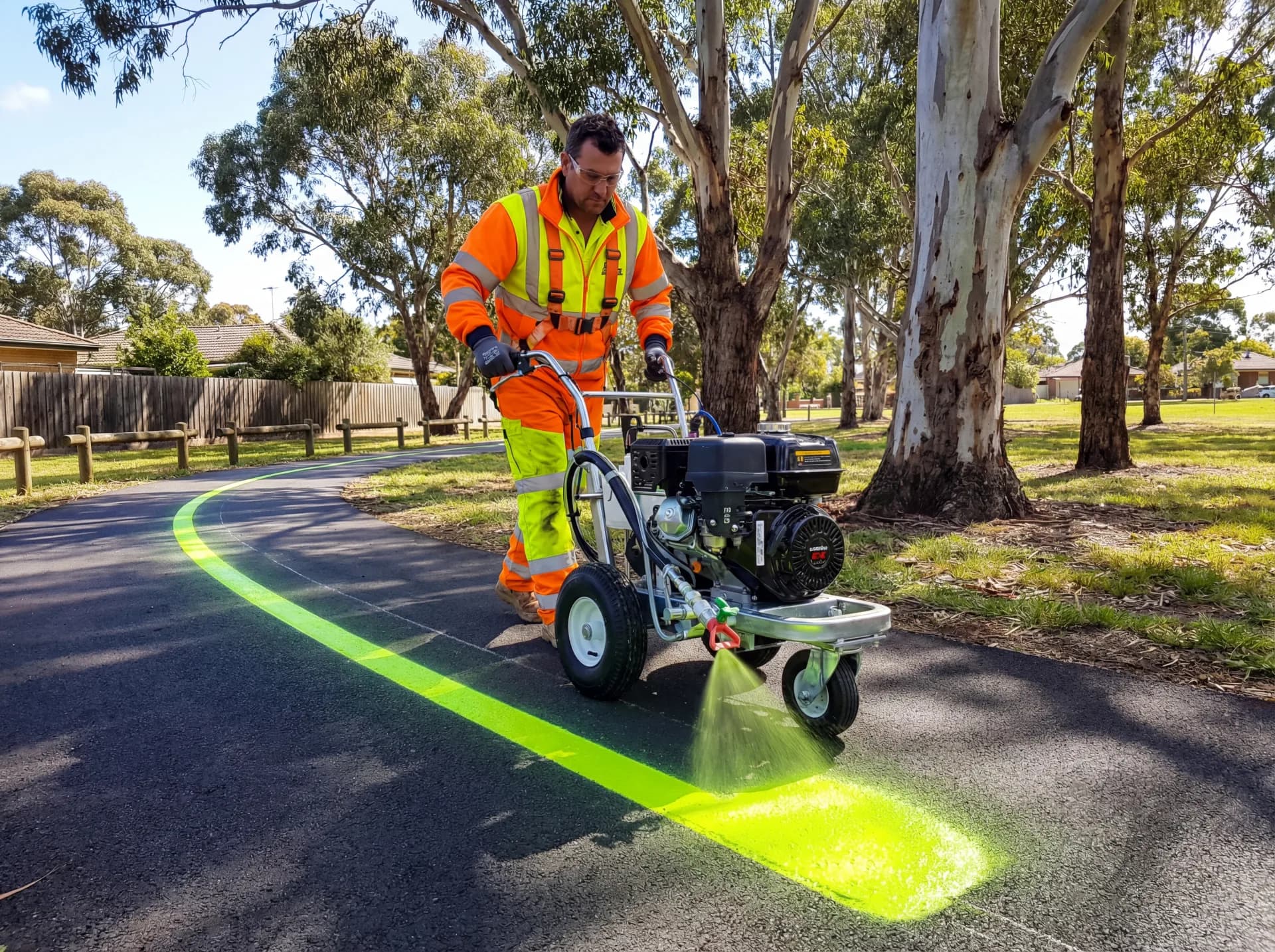
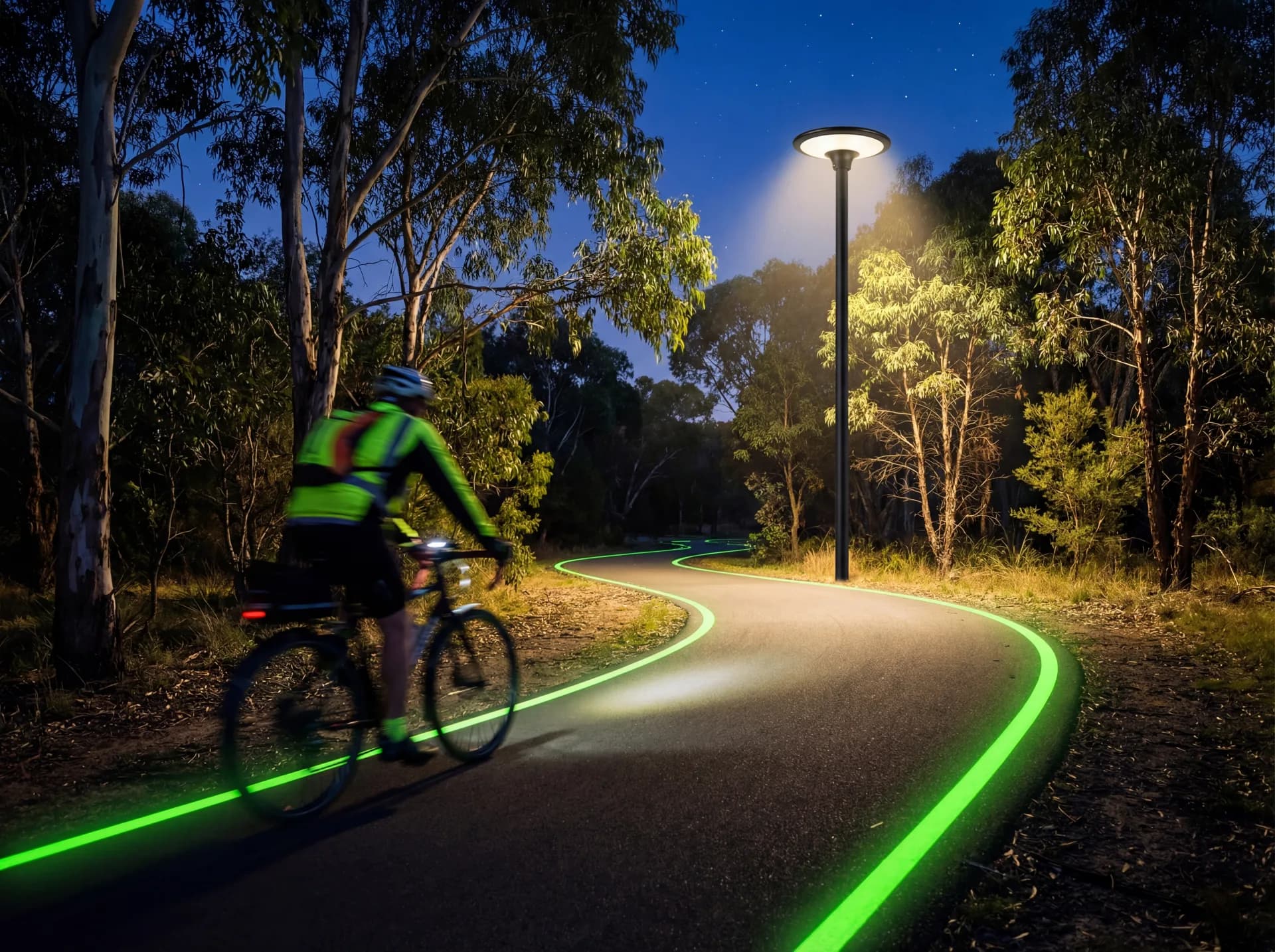
A decade later, this pioneering project has spawned a global movement. LuminoKrom, the French photoluminescent paint developed by OliKrom, has been deployed across bike paths, urban murals, children's parks, and nature trails. The technology has reached Australia, with Blacktown City Council installing Oceania's first LuminoKrom deployment in 2024.
Pioneering Projects: Where Art Meets Wayfinding
These landmark installations demonstrate the diverse potential of photoluminescent public art:
Van Gogh-Roosegaarde Cycle Path
2014Nuenen, Netherlands — Studio Roosegaarde + Heijmans
The world's first glow-in-the-dark bike path, inspired by Van Gogh's "Starry Night". 600 metres of photoluminescent stones embedded in concrete, marking the 125th anniversary of Van Gogh's death in the town where he lived from 1883-1885.
Impact: Pioneered the concept of "techno-poetry" in infrastructure, proving luminescent paths could be both functional and culturally significant.
Square du Temps des Cerises
2020Île-Saint-Denis, France — Concepto
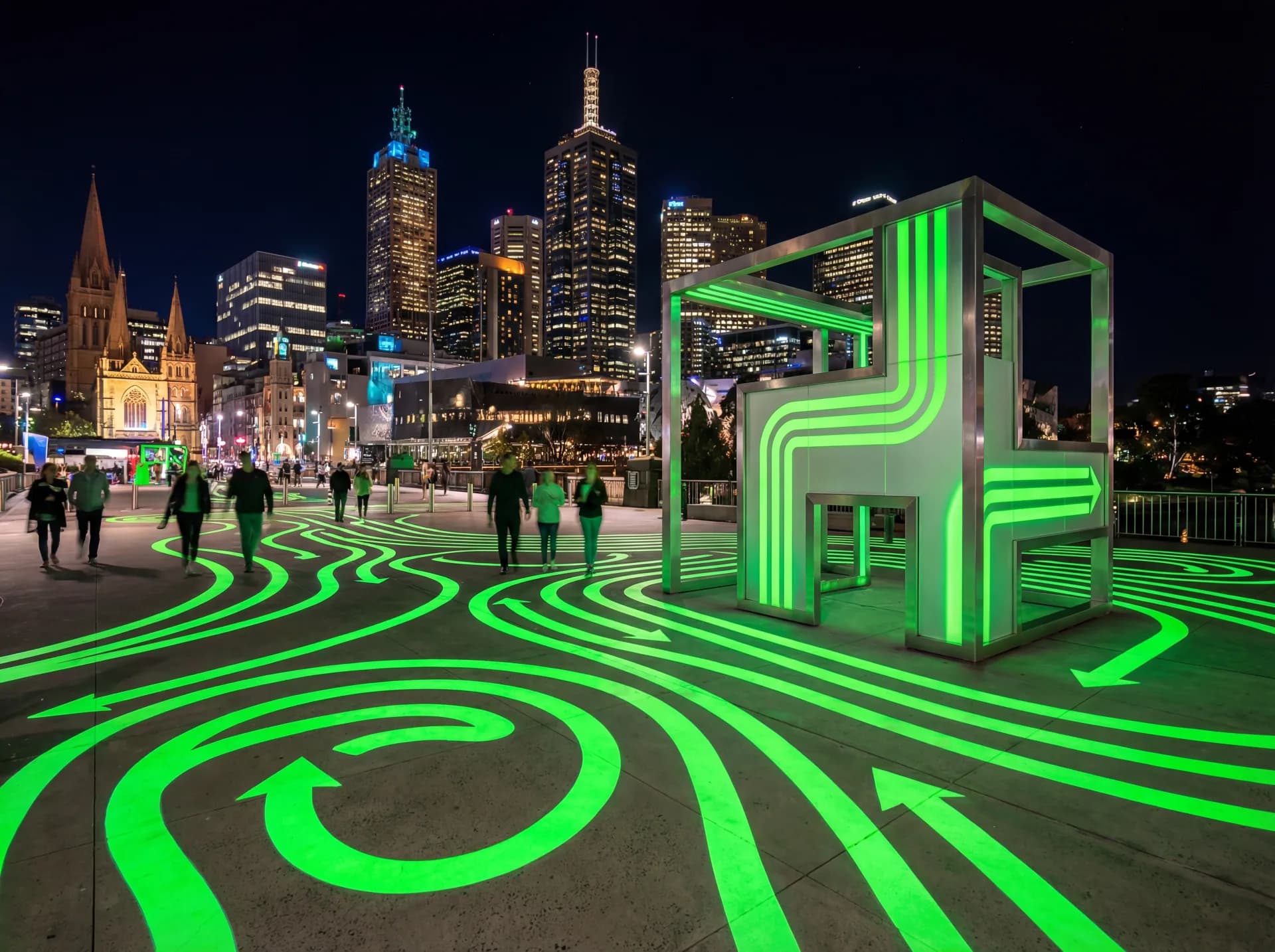
A photoluminescent ground mural in a children's park, designed by lighting agency Concepto. The artwork transforms at night, creating an immersive play environment that glows without electricity.
Impact: Demonstrated LuminoKrom's potential for artistic ground installations in community spaces.
Toulouse Cycle Path
2023Toulouse, France — Mozerr Signal
The Rue du Crabe cycle path features LuminoKrom photoluminescent paint in a discontinuous central strip with bicycle logos. The path guides cyclists through areas with limited street lighting.
Impact: Showed how municipalities can integrate art and wayfinding in active transport infrastructure.
Why Art-Based Wayfinding Works
According to Art Pharmacy, an Australian consultancy specialising in public art strategy, "public art has the power to enrich a passerby's understanding of their context in a way far deeper than informative streetside maps can." Artworks become landmarks that guide people "in a more creative, meaningful and memorable way."
Dual Life: Day Art, Night Guide
Photoluminescent artworks function as conventional public art during daylight, then transform into glowing wayfinding elements after dark—two experiences from one installation.
Zero Light Pollution
Unlike traditional illumination, photoluminescent paint produces a soft glow with lower light pollution than powered lighting. Suitable for parks and nature corridors when designed carefully.
Memorable Placemaking
Glowing paths and murals become landmarks that visitors remember. Art Pharmacy research shows public art creates "stronger associations between place and artwork" than conventional signage.
Activates Underused Spaces
Dark alleys, underpasses, and neglected laneways can be transformed into vibrant night-time destinations and community focal points.
The Australian Context
Australian councils are increasingly recognising the connection between public art and placemaking. The Sydney Inner West Council's Gadigal Wangal Wayfinding Project commissioned five First Nations artists to create works that "explore meaningful connections to the Gadigal Wangal Lands" — demonstrating that wayfinding can celebrate culture while guiding pedestrians.
While photoluminescent public art is still emerging in Australia, several projects point to growing interest:
Warrnambool Glow Mural
Timor Street, Warrnambool VIC — Street Art
Artist Jimmi Buscombe created a glow-in-the-dark mural using specially imported paint at the F Project driveway. Visitors can use torches to temporarily add to the artwork—an interactive element unique to photoluminescent art.
Gadigal Wangal Wayfinding Project
Sydney Inner West — Cultural Wayfinding
In 2019, Sydney Inner West Council commissioned five First Nations artists to create works exploring connections to Gadigal Wangal Lands. While not photoluminescent, this project exemplifies the growing recognition that wayfinding can be culturally meaningful public art.
Blacktown LuminoKrom Installation
Blacktown, NSW — Active Transport
Australia's first Oceania deployment of LuminoKrom on bike paths, installed by Blacktown City Council in 2024. While primarily functional, the glowing edge markings demonstrate the aesthetic potential of photoluminescent wayfinding.
Application Types: From Murals to Nature Trails
Photoluminescent paint can transform diverse urban elements into glowing wayfinding art:
Ground Murals (Asphalt Art)
Large-scale designs painted directly on paths, plazas, and road surfaces. Particularly effective at pedestrian crossings and gathering spaces.
Technical note: Requires minimum 900 g/m² application. Durable for 5+ years with proper preparation.
Wall Murals
Street artists use photoluminescent paints to create murals that reveal hidden elements at night—a second "layer" visible only in darkness.
Technical note: Works on concrete, brick, metal, and prepared wood surfaces. Can be combined with conventional paint.
Sculptures & Installations
Three-dimensional artworks with photoluminescent coatings create ethereal night-time effects. Particularly striking in gardens and waterfront settings.
Technical note: Coating requires UV-stable topcoat for longevity. Works with various substrates.
Urban Furniture
Benches, bollards, and planters marked with photoluminescent accents serve as both functional infrastructure and wayfinding aids.
Technical note: Ideal for defining edges and highlighting obstacles in pedestrian zones.
Nature Trails
Educational trails where photoluminescent markers guide visitors while minimising impact on nocturnal wildlife—unlike powered lighting.
Technical note: Can incorporate interpretive elements that "reveal" information at night.
For Councils: Getting Started with Photoluminescent Art
If you're a council officer exploring photoluminescent solutions for your community, here are key considerations:
- 1Identify high-impact locations — The best candidates are paths with limited existing lighting but regular pedestrian/cyclist traffic: park trails, foreshore paths, underpasses, and shared pathways.
- 2Engage local artists early — The most successful projects integrate artistic vision from the start, not as an afterthought. Consider commissioning local or First Nations artists to design patterns that reflect community identity.
- 3Consider dark-sky implications — Photoluminescent paint is ideal for dark-sky compliance areas where conventional lighting is restricted. The soft glow doesn't contribute to urban light pollution.
- 4Budget for proper application — LuminoKrom requires minimum 900 g/m² for optimal performance. Underapplication results in shorter glow duration and reduced visibility.
- 5Plan community engagement — Glowing paths generate significant community interest and media coverage. Plan an unveiling event at dusk to showcase the transformation from day to night.
The Future: Interactive and Immersive Experiences
The Warrnambool mural by Jimmi Buscombe points to an exciting direction: interactive photoluminescent art. Because the paint can be "charged" with any light source, visitors can use torches to temporarily draw on the artwork, creating a constantly evolving public canvas.
This interactivity opens possibilities for:
- Educational nature trails where information is "revealed" by visitor torches, creating gamified learning experiences
- Community art events where groups create temporary glowing murals that fade over hours
- Augmented reality integrations where phone flashlights activate hidden artwork elements for digital-physical hybrid experiences